Costs and pricing
Part of Music talent agency commission rates in the UK: what acts pay
Music talent agency commission rates in the UK: what acts pay
Typical UK music commission rates for managers, booking agents and live agencies, what sits outside commission, and how deals differ from US customs.
What to take away
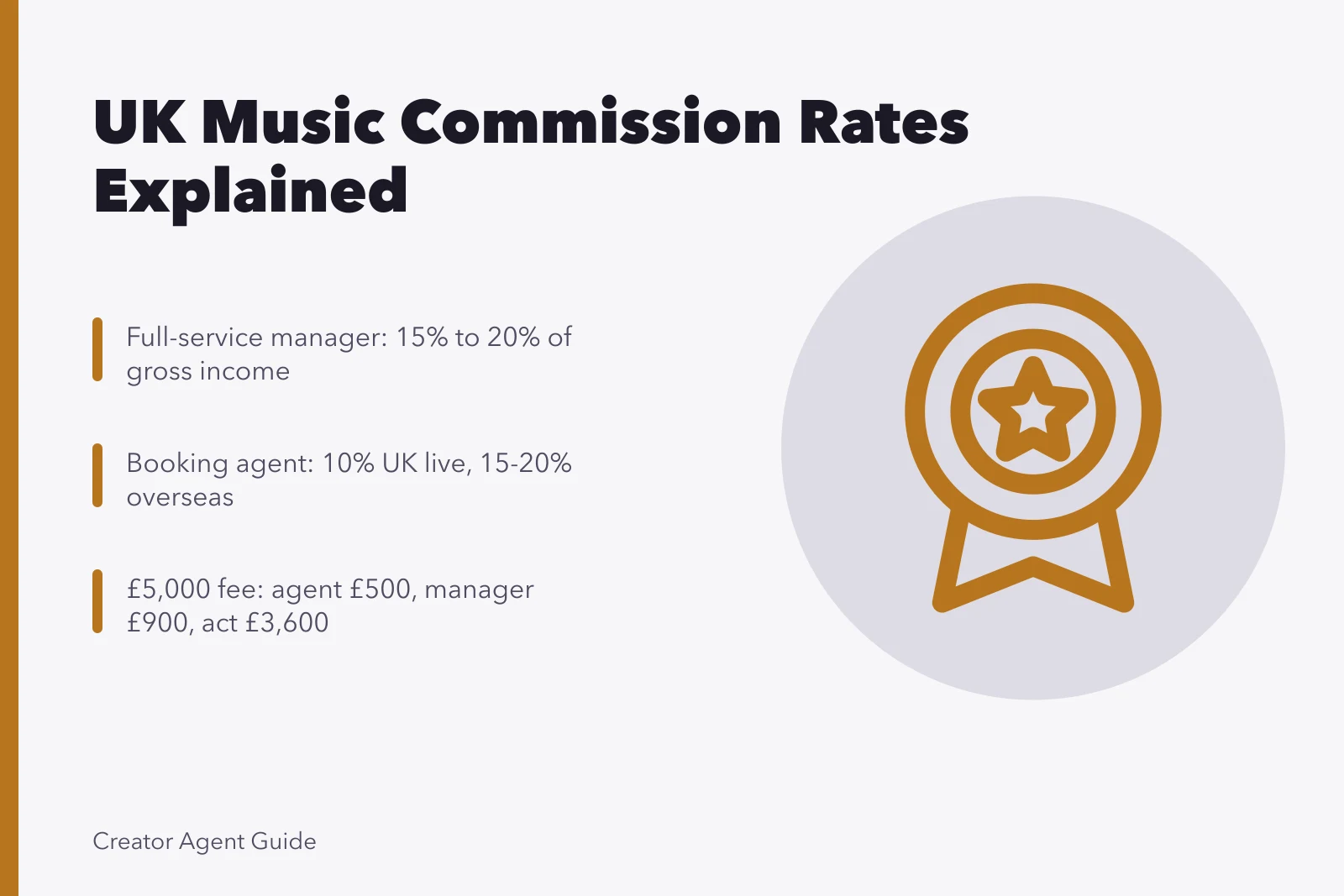
- A full-service UK music manager typically asks for 15% to 20% of gross income, with 20% the most quoted figure.
- Booking agents usually take 10% on UK live fees and 15% to 20% overseas.
- Commission is charged on gross fees before costs, so the wording of the deal matters more than the rate.
- PRS and MCPS royalties are paid separately, and commission on them depends on the management agreement.
- US deals often run at 20% with longer terms and post-term commission, so compare like for like.
How music commission is calculated
Commission is a share of the income a manager or agent brings in, not a salary. The percentage is agreed in the contract and attaches to defined income, not to everything the act earns.
The ranges below are illustrative figures commonly quoted in the UK market, not survey data.
Gross is the usual base. A manager taking 20% of gross is paid before touring costs, travel and equipment come out. That is why 15% of net can cost an act more than 20% of gross.
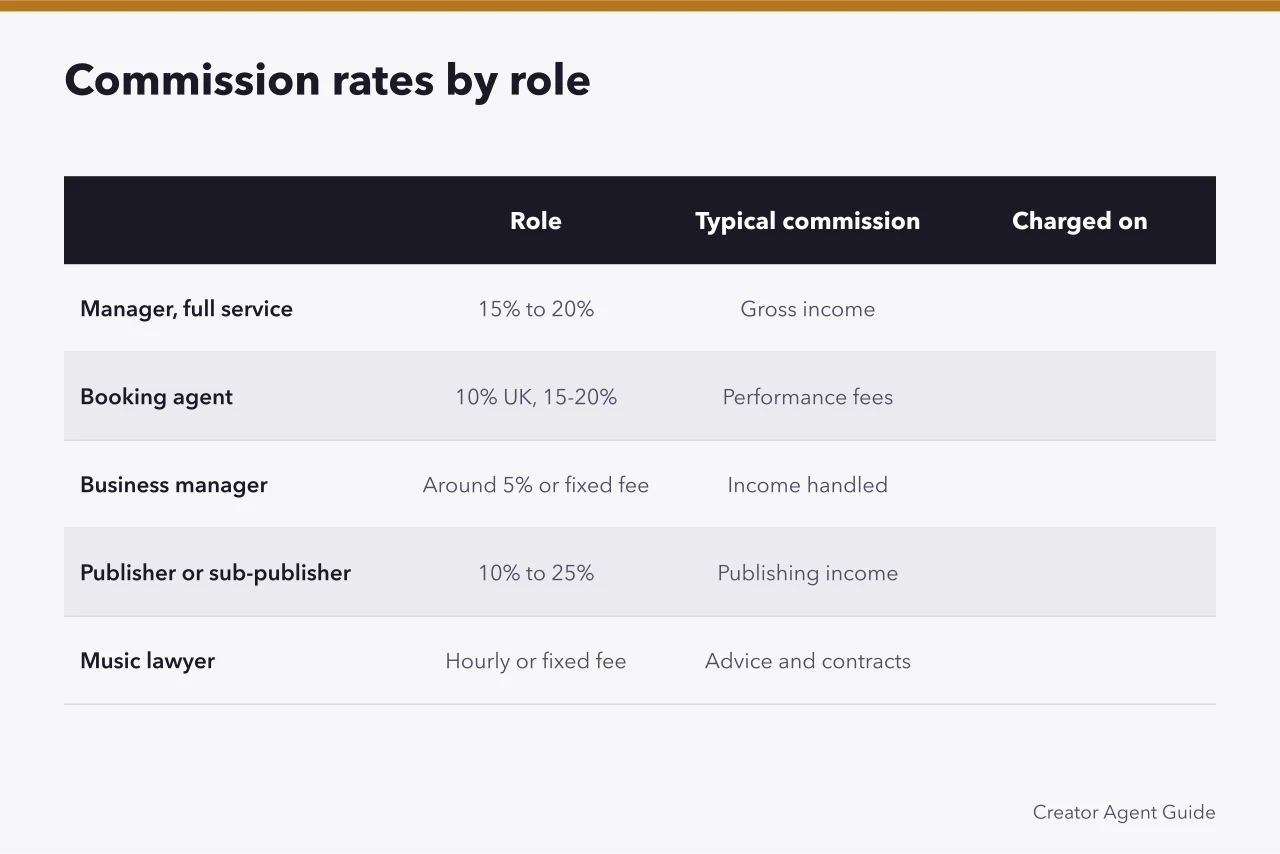
Typical commission rates by role
Rates track the work and the risk. Live fees are the most standardised; publishing and recorded income are the most negotiated.
If brand work now outweighs gig income, how talent managers differ from influencer marketing agencies explains where the two models split.
| Role | Typical commission | Charged on |
|---|---|---|
| Manager, full service | 15% to 20% | Gross income from live, recorded and brand work |
| Booking agent | 10% in the UK, 15% to 20% overseas | Agreed performance fees |
| Business manager | Around 5%, or a fixed monthly fee | Income handled, plus accounts work |
| Publisher or sub-publisher | 10% to 25% | Publishing income collected |
| Music lawyer | Hourly or fixed fee | Advice and contract review |
A worked example: a £5,000 live fee
A promoter agrees an illustrative fee of £5,000 for a 300-capacity show. The numbers are round and show the order of deductions, not a market rate.
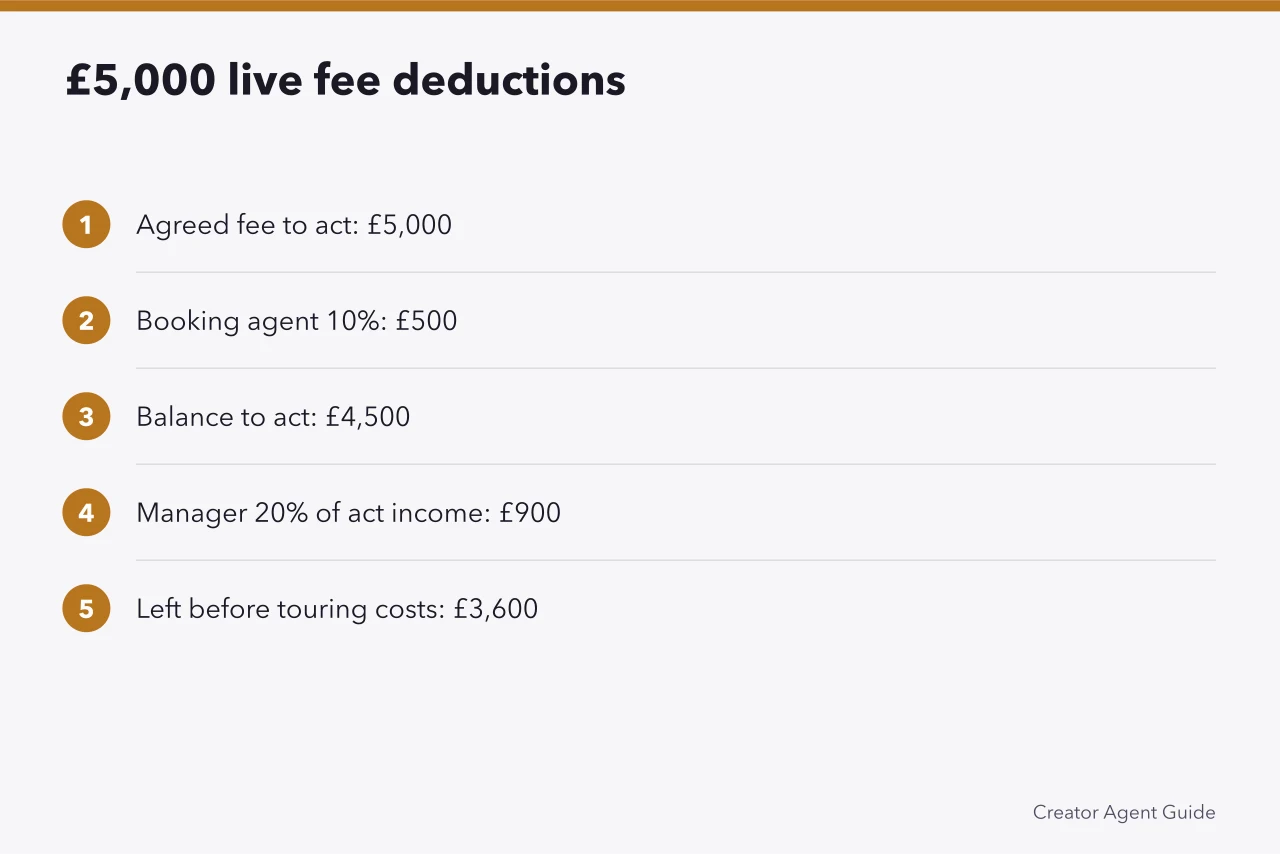
- Agreed fee to the act: £5,000.
- Booking agent's 10% of the fee: £500.
- Balance paid to the act: £4,500.
- Manager's 20% of the act's income: £900.
- Left for the act before touring costs and VAT: £3,600.
If the manager's 20% applies to the full £5,000 instead, the manager takes £1,000 and the act keeps £3,500. On one modest show the difference is £100; across a 30-date tour it reaches £3,000.
If the agent or manager is VAT registered, commission is charged plus VAT at 20%, which the act may be able to reclaim.
Where PRS and MCPS income fits
PRS for Music collects royalties when songs are performed in public, broadcast or streamed. MCPS collects mechanical royalties when recordings are copied or distributed. Payments go to writers and publishers, not to managers.
Whether a manager takes commission on that income is a drafting choice. Some agreements cover all music income; others exclude royalties or apply a lower rate to them.
The practical question is whether the agreement treats royalties as income the act has earned or as income the manager generated. Get that sentence in writing.
What to check before you sign
- Term: one year with a notice period beats a three-year lock-in.
- Scope: list the income streams the percentage attaches to, and the exclusions.
- Base: gross or net, and which costs are deductible.
- Sunset clause: how long commission survives once the deal ends.
- VAT: whether commission is quoted inclusive or exclusive.
Brand deals and sync cause the most disputes. If brand work now leads your earnings, what influencer management agencies charge in the UK covers the fees on that side.
Agencies that introduce performers to engagers work within the framework of the Employment Agencies Act 1973, which sets basic duties on terms of business.
A manager trading through a limited company contracts through that company, and reporting duties come from the Companies Act 2006. Managers setting up for the first time can work through the GOV.UK guidance on setting up a business.
Common questions
Do UK managers take commission before or after an agent's cut?
Usually after, where the agent's commission counts as a cost of earning the fee. Some contracts apply the manager's percentage to the gross fee instead, so check that line.
Is 20% standard for a music manager in the UK?
It is the figure most often quoted for full-service management. Newer managers may offer 15%, and acts on limited income sometimes agree less for a fixed period.
Do booking agents take commission on merchandise?
Most booking agents are paid on performance fees only. Merchandise, recorded music and brand deals usually sit outside that commission unless the agreement says otherwise.
How do US commission rates compare?
US management deals commonly run at 20% with three to five year terms and post-term commission. UK deals tend to be shorter and more negotiable, which makes a direct comparison awkward.