Rules and ethics
Part of 5 questions to ask a UK talent agency before signing
5 questions to ask a UK talent agency before signing
Ask these five questions before you sign with a UK talent agency: fee structure, contract length, who owns the relationship, data handling and exit terms.
What to take away
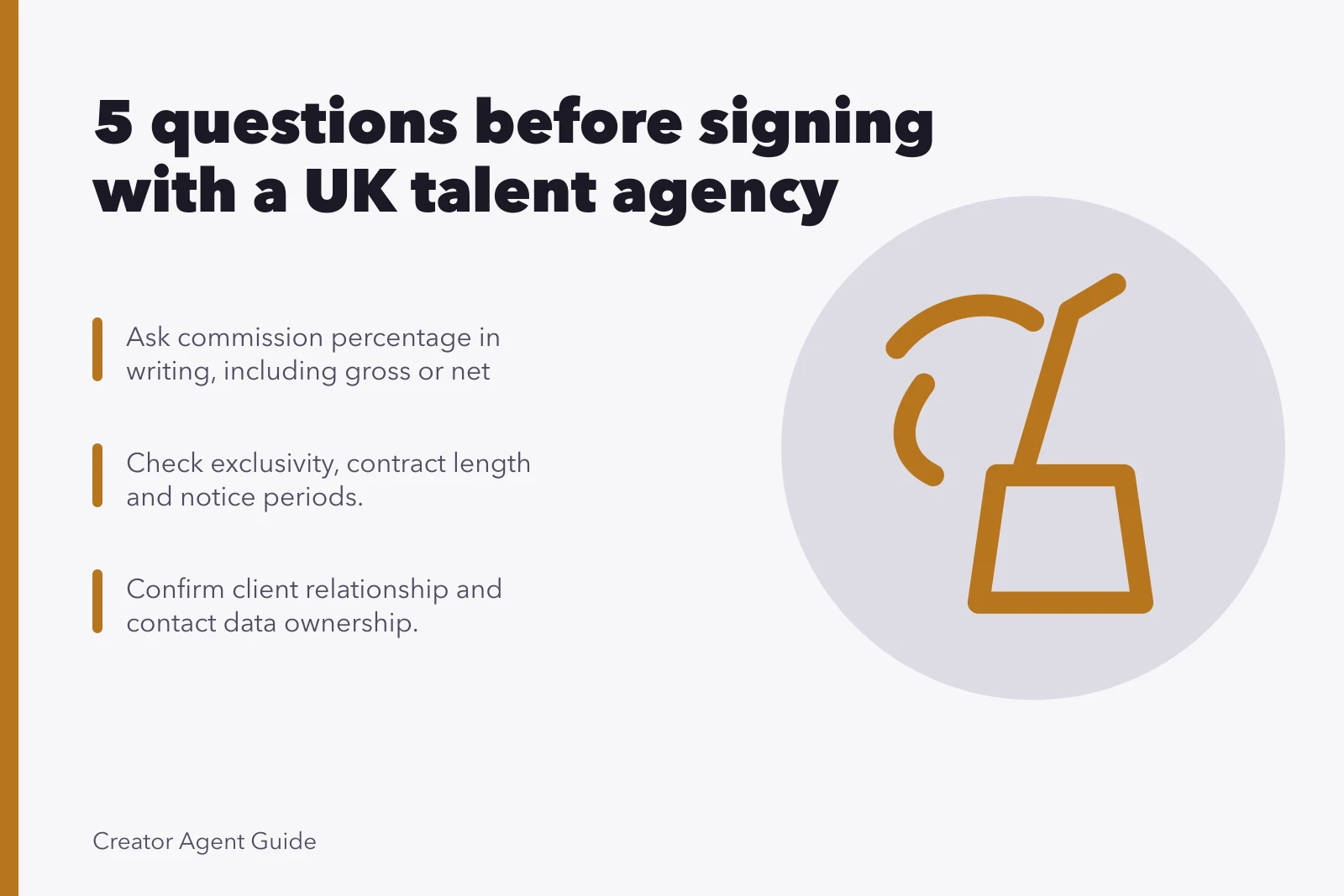
- Ask for the commission percentage in writing, including what counts as gross and net, before any contract is drafted.
- Check whether the agreement is exclusive, how long it runs and what notice each side must give to leave.
- Confirm who owns the client relationship and the contact data if the deal ends.
- Ask how the agency handles disclosure rules under the CAP Code and data duties under UK GDPR.
- Get exit terms, including unpaid commissions on live campaigns, in writing rather than in a verbal promise.
Why pre-signing questions matter more than ever
A talent agency sits between your business and the creators you pay. The terms you agree at the start decide how much control you keep later.
UK competition law also shapes how agencies present their fees. The Competition and Markets Authority has taken an interest in how online platforms and intermediaries describe charges to business users. Vague commission wording is a commercial risk, not just an annoyance.
A short written set of answers protects you far better than a long conversation. Use the questions below as a checklist and keep the replies on file.
The five questions, in order
- What exactly is your commission, and on what figure is it calculated?
- Is this contract exclusive, and for how long?
- Who owns the client relationship and the contact data?
- How do you handle advertising disclosure and personal data?
- What happens on exit, including live campaigns and unpaid fees?
Ask each one in writing and ask for the answer to be reflected in the draft agreement.
Question 1: what are your fees, and on what figure?
A headline rate of 20 per cent means little until you know the base. Agencies commonly quote commission on gross campaign value, on net after creator fees, or as a flat retainer plus a lower percentage.
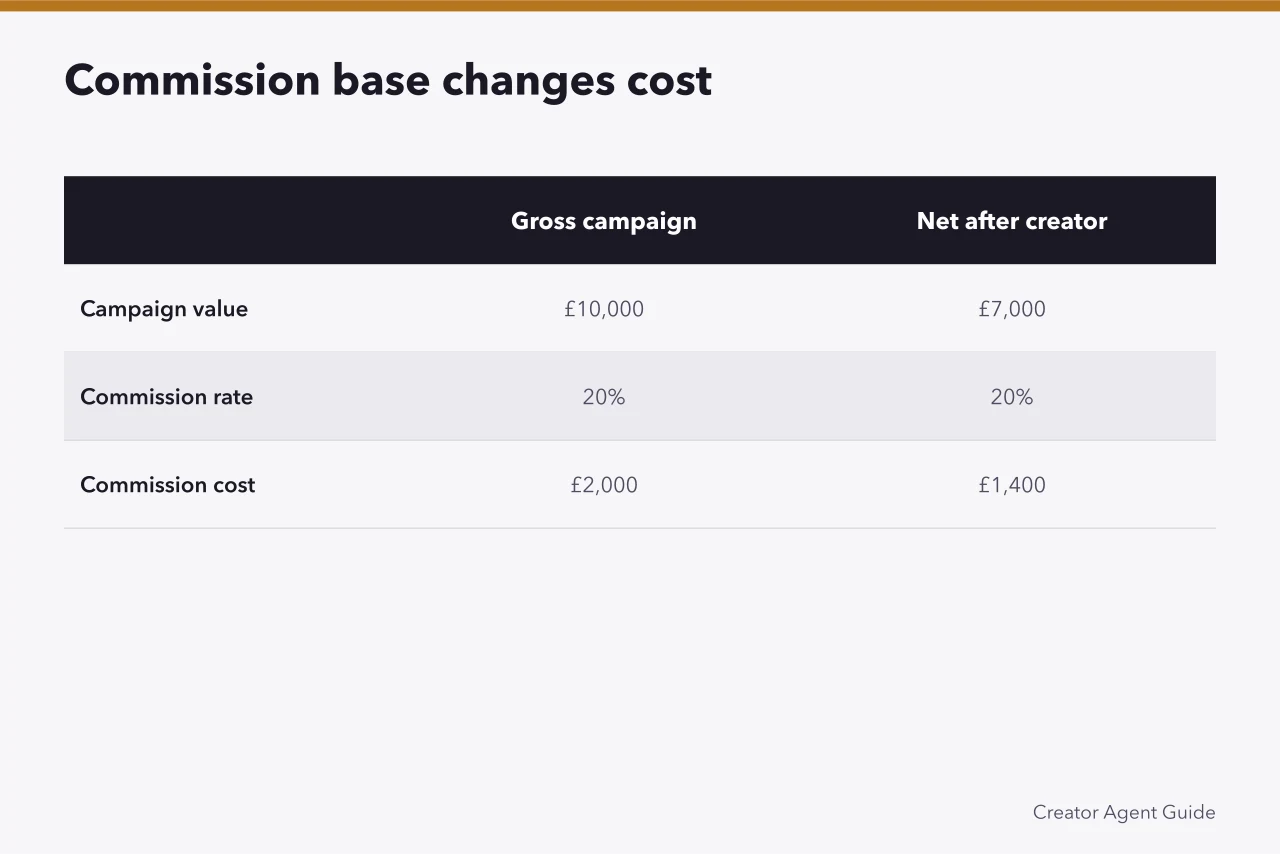
The distinction changes your budget materially. On a £10,000 campaign, a 20 per cent commission on gross costs £2,000. The same rate applied to a net figure of £7,000 costs £1,400.
Ask whether VAT is included, who pays third-party costs and whether the agency takes a margin on production or paid media as well as commission. Our guide to what influencer management agencies charge in the UK sets out typical structures.
Question 2: how exclusive is the deal, and for how long?
Exclusivity is the clause that causes the most disputes. A three-year exclusive across all creators and all platforms is very different from a six-month exclusive on one campaign.
Ask what happens if you want to run a campaign directly with a creator the agency introduced. Ask whether the agency earns commission on work you source yourself.
Exclusivity clauses deserve their own reading. Talent agency exclusivity clauses explained covers the wording to look for before you sign.
Question 3: who owns the relationship and the data?
The agency may hold the creator contact, the rate card and the briefing history. If the relationship ends, can you still work with those creators?
Under the UK GDPR, personal data such as creator contact details is held lawfully only for stated purposes. The ICO's guide to data protection for organisations explains the duties that apply to both parties in a campaign.
Ask for a written answer on data ownership, retention periods and deletion on exit.
Question 4: how do you handle disclosure and compliance?
The CAP Code requires ads to be obviously identifiable, and that duty sits with the brand as well as the creator. The advertising codes published by the ASA set out the rules on labelling.
Ask the agency how it labels content, who checks drafts and what happens if a creator posts without disclosure.
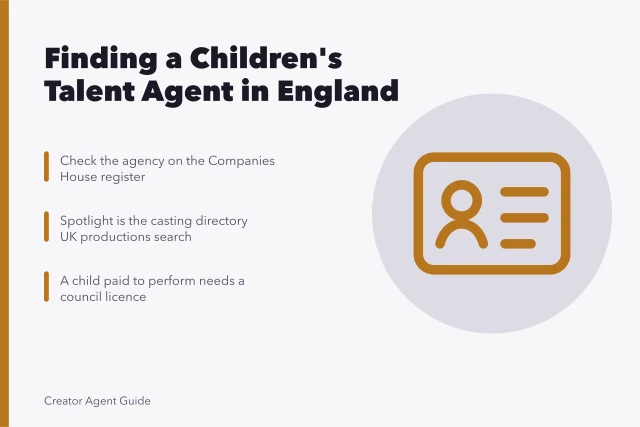
If children are involved, the rules tighten further. Child performance licensing and working hours sit with the local authority, and GOV.UK's guidance on child employment explains the minimum ages and permits that apply in England.
Comparing agency models side by side
| Question | Full-service talent agency | Campaign-only agency |
|---|---|---|
| Fee basis | Commission on earnings, often 15 to 25 per cent | Project fee plus commission |
| Exclusivity | Usually broad and long-term | Usually limited to the campaign |
| Relationship owner | Agency holds creator contact | Brand often holds the contact |
| Exit | Notice period plus tail commission | Ends when the campaign ends |
Figures above are illustrative ranges, not quoted rates.
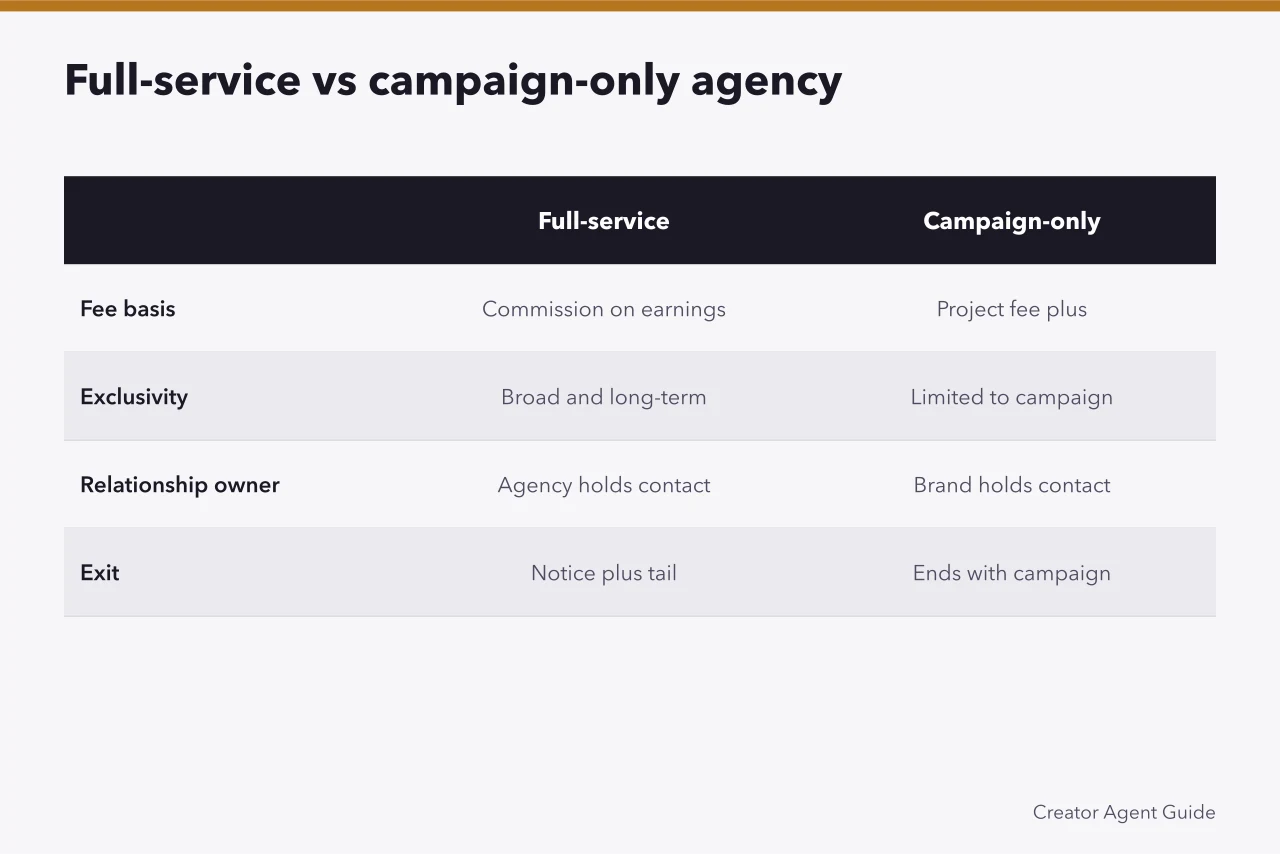
If the model is unclear, influencer agency or talent agency: which handles brand campaigns breaks down the practical difference.
Common questions
How long should a first contract run?
Twelve months with a rolling notice period is common for a first deal. Anything beyond two years with no break clause deserves scrutiny, and you should ask what happens if performance targets are missed.
What counts as a red flag?
No written fee schedule, no named contact, pressure to sign the same day, or refusal to explain the commission base. An agency that will not put terms in an email is a poor bet.
Do I need to check the agency's registration?
Yes. Ask for the registered company number and check the filing history at Companies House. Larger agencies may also belong to a trade body, which can offer a route for complaints.
Can I negotiate the commission?
Often, yes, particularly if you commit to a minimum spend or bring creators to the table. Get any agreed variation written into the contract before signing.